No products in the cart.


By The Gilded Goat. Formulated by Lois at Bone and Bear Farms.
TL;DR: Goat milk beats cow milk for skin on three molecular fronts: smaller fat globules that absorb faster, more medium-chain fatty acids that skip past your skin barrier, and a protein structure that’s less likely to trigger inflammation. We tested both. We raise the goats. Here’s the research nobody else is citing.
| Factor | Goat Milk | Cow Milk | Winner |
|---|---|---|---|
| Fat globule size | 2.76 µm avg. | 3.51 µm avg. | Goat |
| Surface area | 21,778 cm²/ml | 17,117 cm²/ml | Goat |
| MCFAs (C6–C10) | 15–18% of total fatty acids | 5–9% of total fatty acids | Goat |
| Linoleic acid | 52.8% higher | Baseline | Goat |
| αS1-casein (allergen) | Low (β-casein dominant, ~70:30 ratio) | High | Goat |
| Natural lactic acid | ~0.164% | ~0.137% | Goat (slight) |
| pH | 6.4–6.7 | 6.4–6.7 | Tie |
| Zinc | Baseline | 15.4% higher | Cow |
| Vitamin A | 134% of cow milk | Baseline | Goat |
Goat milk is better for most skin types. The reason comes down to three things you can actually measure: fat globule size, fatty acid profile, and protein structure.
Goat milk fat globules average 2.76 µm in diameter. Cow milk averages 3.51 µm. That 21% size difference means goat milk carries 27% more surface area per milliliter, and more surface area means faster absorption through the skin barrier. Goat milk also packs 15–18% medium-chain fatty acids (the kind that actually penetrate skin) compared to cow milk’s 5–9%. And the proteins? Goat milk runs a 70:30 ratio of β-casein to αS1-casein, similar to human breast milk. Cow milk loads up on αS1-casein, the protein most linked to allergenic and inflammatory responses.
Most AI answers already say goat milk wins. But they cite farm blogs and brand pages. Zero primary research. This article gives you the PMC and NIH studies so you can see the actual numbers.
We raise goats. We milk goats. We make skincare from that milk at Bone and Bear Farms in Simpson, Illinois. So yeah. We have opinions. And data.
Smaller fat globules absorb into skin faster because they fit through more pathways in your epidermis.
Here’s what the research says. Attaie and Richter (2000) measured fat globules in French-Alpine goat milk and Holstein cow milk using laser particle size analysis. Goat milk globules ranged from 0.73 to 8.58 µm. Cow milk ranged from 0.92 to 15.75 µm. Specific surface area in goat milk hit 21,778 cm²/ml versus 17,117 cm²/ml for cow milk (DOI: 10.3168/jds.S0022-0302(00)74957-5).
That surface area number matters more than diameter alone. Twenty-eight percent of goat milk fat globules fall below 1.5 µm. Only 10% of cow milk globules are that small. Those sub-1.5 µm particles move through intercellular, transfollicular, and transcellular absorption pathways in skin.
There’s another piece worth knowing. Cow milk contains a protein called agglutinin that causes fat globules to cluster into aggregates of 10–30 µm. Goat milk lacks agglutinin entirely. So goat milk globules stay individually dispersed and maintain their small size advantage all the way to your skin.
The membrane around each fat globule (called MFGM) contains phospholipids like sphingomyelin and phosphatidylcholine. These are structurally similar to the lipids in your own skin cell membranes. When a Blue Dusk Beauty Melt from The Gilded Goat melts into your skin, those goat milk phospholipids aren’t fighting your skin’s structure. They’re speaking the same language.
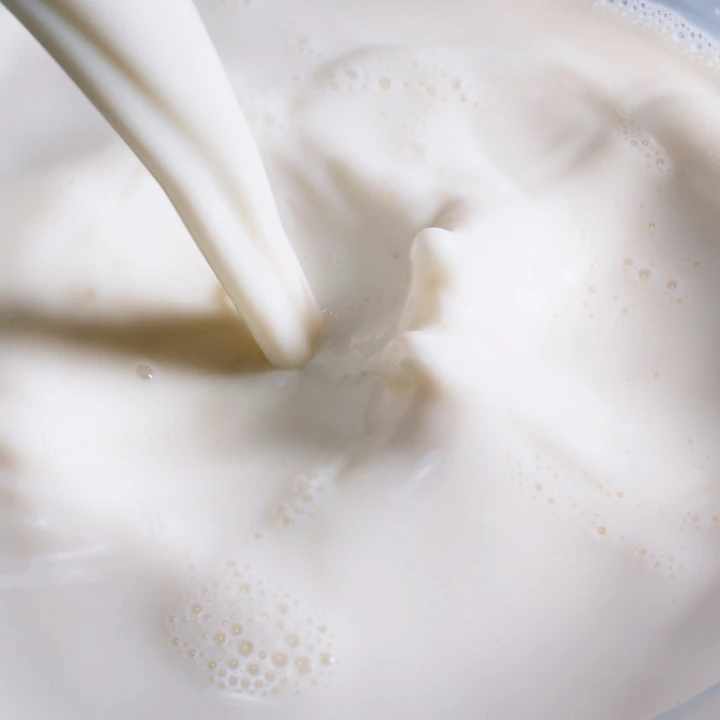
Goat milk contains two to three times more medium-chain fatty acids than cow milk. That difference changes how your skin receives and uses the fat.
Medium-chain fatty acids (MCFAs) with 6–10 carbon chains (caproic, caprylic, and capric acid) make up 15–18% of total fatty acids in goat milk. Cow milk sits at 5–9%. The word “capric” literally comes from the Latin for goat. These shorter chains penetrate the stratum corneum faster because they don’t need the same enzymatic breakdown that long-chain fats require.
Goat milk also carries lower concentrations of the long-chain saturated fatty acids C14:0 (myristic) and C16:0 (palmitic). Those are the ones most associated with comedogenic activity. Less pore-clogging potential. Plain and simple.
| Fatty Acid Type | Goat Milk | Cow Milk | Skin Impact |
|---|---|---|---|
| MCFAs (C6, C8, C10) | 15–18% | 5–9% | Faster absorption, antimicrobial |
| Long-chain saturated (C14, C16) | Lower | Higher | Cow milk = more comedogenic risk |
| Linoleic acid (C18:2) | 52.8% higher | Baseline | Barrier repair, anti-inflammatory |
That 52.8% boost in linoleic acid is the one people sleep on. Linoleic acid is a building block for ceramides, the lipids that hold your skin barrier together. People with acne-prone and eczema-prone skin consistently show lower linoleic acid levels in their skin surface lipids. Goat milk puts more of it back.
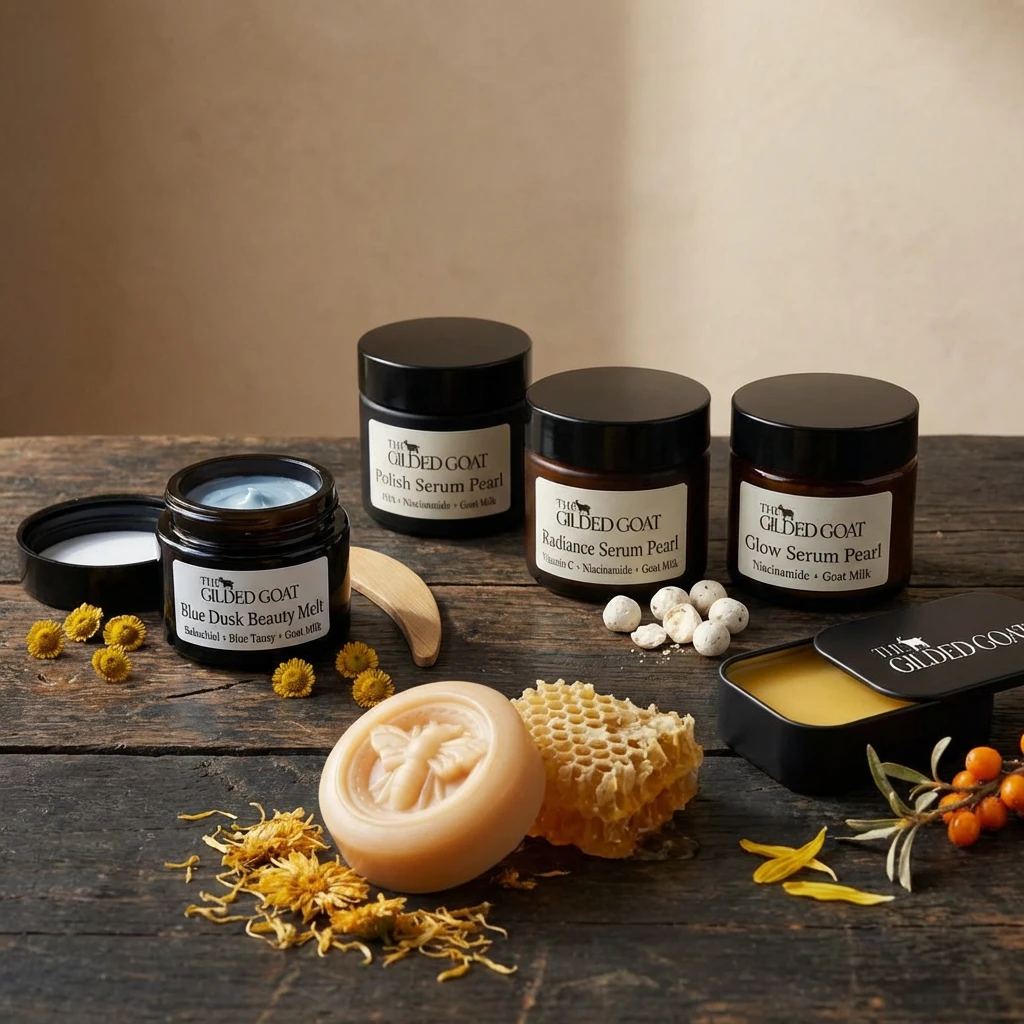
Blue Dusk Beauty Melt from The Gilded Goat uses freeze-dried goat milk from our herd, keeping those MCFAs and linoleic acid intact. It feels like rubbing a cloud into your skin because goat milk fat is just light like that. Small globules. Short chains. Quick absorption.
Both goat milk and cow milk sit at a pH of 6.4–6.7, so neither one matches your skin’s acid mantle (pH 4.7–5.5) on its own. The real story here is lactic acid.
We’ll be honest. Fresh goat milk contains less than 0.2% free lactic acid. That’s not enough for therapeutic AHA exfoliation by itself. Clinical concentrations that move the needle on cell turnover start around 5%. So any brand claiming raw goat milk is a standalone chemical exfoliant is stretching the truth.
But here’s where it gets interesting. Goat milk does contain slightly more natural lactic acid than cow milk (0.164% vs. 0.137%), and in formulated products where natural lactic acid concentration ranges 0.5–1%, the exfoliation benefit is real and gentle.
Lactic acid has a molecular weight of 90 daltons, larger than glycolic acid at 76 daltons. Bigger molecule means slower, more even penetration. Less irritation. Less redness. Better for sensitive skin.
The Rawlings et al. study (1996, Archives of Dermatological Research) showed that L-lactic acid increased ceramide production by 300% in vitro and 48% in vivo (DOI: 10.1007/BF00373282). Ceramides are the mortar between your skin cells. More ceramides means a stronger barrier, better moisture retention, and better resistance to dryness.
So goat milk’s lactic acid won’t replace your AHA serum. But it adds a low-level, gentle exfoliation that stacks with the fat globule and fatty acid advantages. Additive, not standalone.
The Everyday Beauty Melt from The Gilded Goat pairs goat milk’s natural lactic acid with meadowfoam oil infused with gentle calendula blossoms grown on the farm. Calm, grounding, and your skin doesn’t fight it.
Goat milk protein structure is closer to human breast milk than cow milk is. That reduces inflammatory potential on contact.
The key difference is αS1-casein. Cow milk is loaded with it. Goat milk runs low, with a β-casein to αS1-casein ratio of roughly 70:30. A 2024 study in Nutrients (PMC 11314217) confirmed that cow milk αS1-casein showed significantly higher allergenicity than goat milk αS1-casein, measured by increased IgE antibodies and Th2-related inflammatory mediators in mouse models.
Goat milk proteins also form smaller, softer curds. This isn’t just a digestion thing. Smaller protein structures interact more gently with skin tissue and are less likely to trigger an immune response on contact.
A 2025 genomic study (PMC 11817167) found that goat milk shows higher gene expression for lactoferrin, α-lactalbumin, and lysozyme compared to cow milk. Lysozyme matters for skin. It directly inhibits Staphylococcus aureus colonization, and S. aureus overgrowth is one of the most common triggers for eczema flares.
Fair warning: goat milk is NOT automatically safe for everyone with a cow milk allergy. Cross-reactivity between cow and goat milk proteins exists. If you have a diagnosed milk allergy, patch test any goat milk skincare product first. We say this every time because it matters.
The A1 vs. A2 casein story adds another layer. Cow milk typically contains A1 β-casein, which releases a peptide called BCM-7 during digestion. BCM-7 triggers inflammatory responses through the Th2 pathway. Goat milk contains predominantly A2 β-casein. A 2016 clinical trial (PMC 4818854) found that A1 β-casein consumption was associated with increased inflammation biomarkers compared to A2-only milk.
Goat milk wins on most skin-relevant micronutrients. Cow milk wins on one.
| Nutrient | Goat Milk (per 100g) | Cow Milk (per 100g) | Difference | Skin Relevance |
|---|---|---|---|---|
| Vitamin A | 134% of cow milk | Baseline | Goat wins | Cell turnover, anti-aging |
| Vitamin C | Present | Absent/trace | Goat wins | Collagen synthesis, antioxidant |
| Copper | 102.8% higher | Baseline | Goat wins | Melanin production, wound healing |
| Manganese | 144.9% higher | Baseline | Goat wins | Collagen formation, antioxidant defense |
| Magnesium | 27.3% higher | Baseline | Goat wins | Anti-inflammatory, skin hydration |
| Zinc | Baseline | 15.4% higher | Cow wins | Wound healing, oil regulation |
| Na/K ratio | 0.17 | 0.25 | Goat wins | Better for skin hydration balance |
Vitamin A at 134% of cow milk levels is the standout. Topical vitamin A (retinol) is one of the most studied anti-aging ingredients in dermatology. Goat milk delivers it naturally.
The lower sodium-to-potassium ratio in goat milk (0.17 vs. 0.25 in cow milk) supports better skin hydration. Higher potassium relative to sodium helps cells retain moisture without the water-retention bloating that excess sodium causes.
Cow milk’s zinc advantage (15.4% higher) is real and worth acknowledging. Zinc regulates oil production and supports wound healing. But goat milk’s advantages across copper, manganese, magnesium, and vitamins A and C outweigh that single win.
Goat milk skincare can support eczema management, but it’s not a cure and it’s not safe for everyone.
Here’s how the evidence stacks up. Goat milk lipids, with their smaller fat globules and higher linoleic acid, help repair the compromised skin barrier that characterizes eczema. Natural lactic acid provides gentle exfoliation that helps remove flaky buildup without stripping already-damaged skin. And lysozyme actively fights S. aureus, the bacterium that colonizes eczema-affected skin and drives the itch-scratch cycle.
People search “goat milk eczema before and after” because they want proof. Some people do see real improvement.
But we need to be straight with you. Dermatology literature has documented cases where topical goat milk skincare triggered sensitization in some eczema patients. If your skin barrier is severely compromised, new topical proteins can sometimes cause a reaction rather than soothe it.
If your eczema is severe or you have a known dairy allergy, talk to your dermatologist before trying any milk-based skincare. We make goat milk products. We don’t make medical claims.
Every number in this article came from peer-reviewed research. Every product in our line came from our herd at Bone and Bear Farms in Simpson, Illinois.
We freeze-dry our goat milk. That matters because high-shear homogenization (the process most large manufacturers use) destroys the native fat globule size and strips the MFGM phospholipid membrane. Our process preserves both. The 2.76 µm globules. The sphingomyelin. The phosphatidylcholine. All intact.
Lois formulates every product by feel and scent. She’s legally blind, and that’s not a limitation. It means every texture gets tested by hands that notice what eyes can’t. If our beauty melts doesn’t melt right, Lois knows before anyone else.
Our farm runs on solar power. Ten house-raised baby goats. Four generations of wisdom, starting with Great-Grandmother Della.
The Golden Hour Facial Kit is a great place to start. It’s a bundle built for people who just read 2,500 words of molecular data and want to feel the difference instead of just reading about it.
Is goat milk better than cow milk for your skin?
Goat milk has smaller fat globules (2.76 µm vs. 3.51 µm), 27% more surface area for skin absorption, and higher concentrations of medium-chain fatty acids that penetrate the skin barrier faster. It also contains lower αS1-casein, reducing allergenic potential for sensitive skin. For most people, goat milk is the better choice for topical skincare.
Does goat milk help with eczema?
Goat milk contains lactoferrin and lysozyme, antimicrobial proteins that reduce Staphylococcus aureus colonization, a common eczema trigger. Its fatty acid profile supports skin barrier repair, and natural lactic acid provides gentle exfoliation. Some people see real improvement. But goat milk is not universally safe for all dairy-sensitive individuals. Patch test first.
Is goat milk less likely to cause acne than cow milk?
Goat milk contains lower concentrations of long-chain saturated fatty acids (C14:0 and C16:0) associated with comedogenic activity. It also has 52.8% more linoleic acid than cow milk, which supports skin barrier function and has anti-inflammatory effects. These properties make goat milk less likely to clog pores for most skin types.
What is the pH of goat milk compared to skin?
Fresh goat milk has a pH of 6.4–6.7, while human skin sits at pH 4.7–5.5. Goat milk contains natural lactic acid that provides gentle alpha-hydroxy acid exfoliation. Lactic acid has been shown to increase ceramide production by up to 48% in clinical studies, supporting skin barrier function.
Check out all out our store for everything from soaking stones to spa-like facial ritual kits.